
A Japanese candle tells at a glance the fight between buyers and sellers: open, high, low, close. Some one- to three-candle shapes have long been known to traders. The Candlestick patterns indicator looks for them on your behalf, with precise rules.
What it is for
These patterns hint at a possible reversal after a move: for example a long lower wick after a drop shows sellers have lost ground. The indicator looks only at prices, so it works as well on Deriv as on Binance, with no volume.
How it is calculated
- Prior trend: the previous candle’s close is compared with the close 5 candles earlier. If the gap reaches at least 1 ATR(14), there is a trend (down or up); otherwise none.
- One candle: the hammer (after a drop) and hanging man (after a rise) have a small body (at most 30% of the height), a lower wick of at least 2.5 times the body and a tiny upper wick (at most 30% of the body). The shooting star (after a rise) and inverted hammer (after a drop) are the same shape flipped.
- Two candles: engulfing (the second’s body wraps the first’s), piercing line and dark cloud (the second retraces more than half of the first), harami (small body contained in the large one).
- Three candles: morning and evening star (a small-bodied transition candle, then a candle that passes the first one’s midpoint), three white soldiers and three black crows (three same-direction candles each advancing).
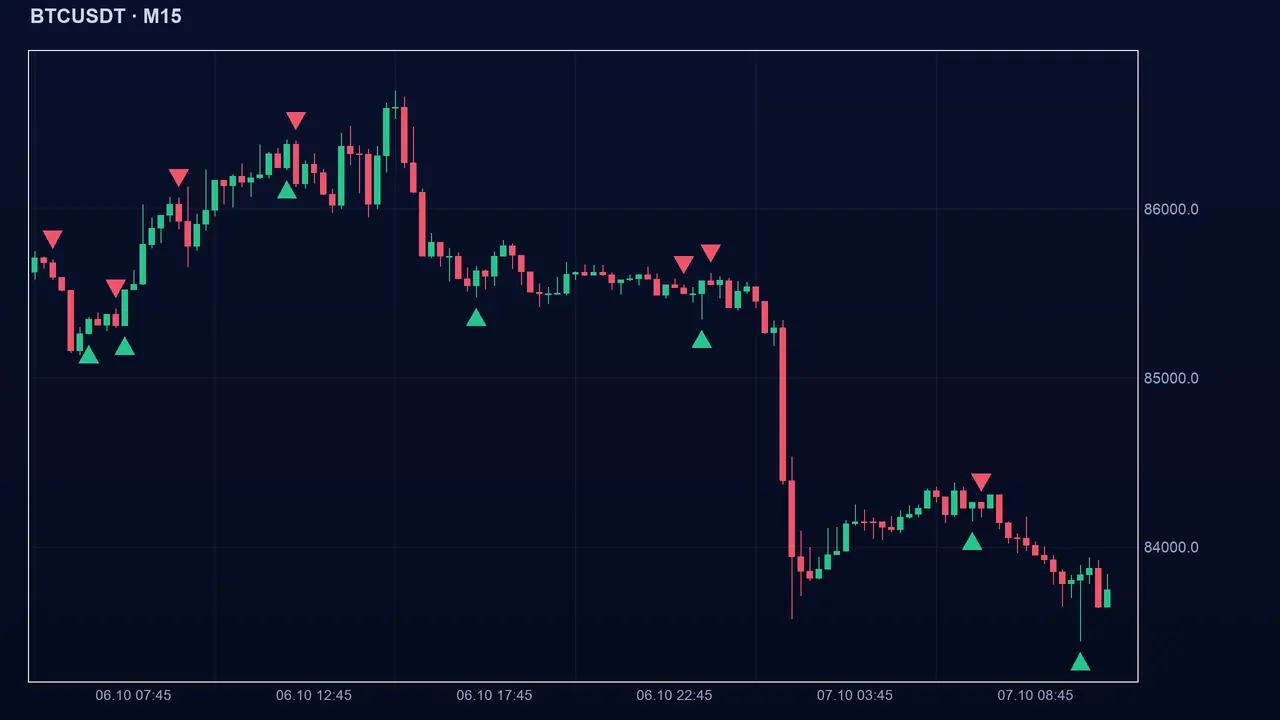
That makes 14 patterns. If one candle combines a bullish and a bearish pattern, it is ignored.
Reading the signal in Algo Signals
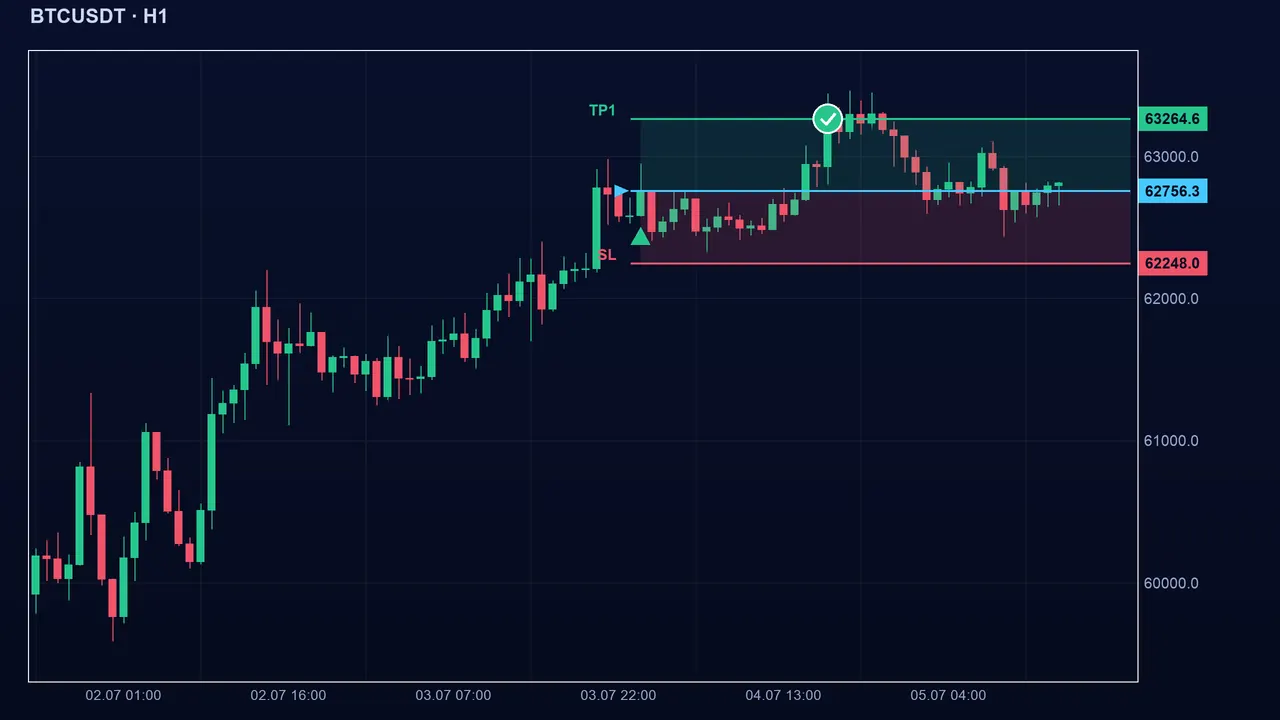
An arrow appears on the candle that completes the pattern: buy for a bullish pattern, sell for a bearish one. The signal applies only to that candle. Engulfing, piercing line and the other two- or three-candle patterns need no prior trend; only the one-candle shapes (hammer, hanging man, shooting star, inverted hammer) require one.
Settings and pitfalls
- Extended patterns (extended, 0 by default): at 1, eight more patterns are searched, but only when none of the original 14 is found on the candle. They are the dragonfly doji, gravestone doji, harami cross, tweezer top and bottom, and rising and falling three methods.
- The thresholds (30%, 2.5 times, ATR over 14 candles, trend over 5 candles) are fixed in the code and cannot be set.
Key takeaways
- 14 patterns of one to three candles, read from prices alone; one setting adds 8.
- Hammer, hanging man, shooting star and inverted hammer require a prior trend of at least 1 ATR over 5 candles.
- A candle that combines a bullish and a bearish pattern is ignored.
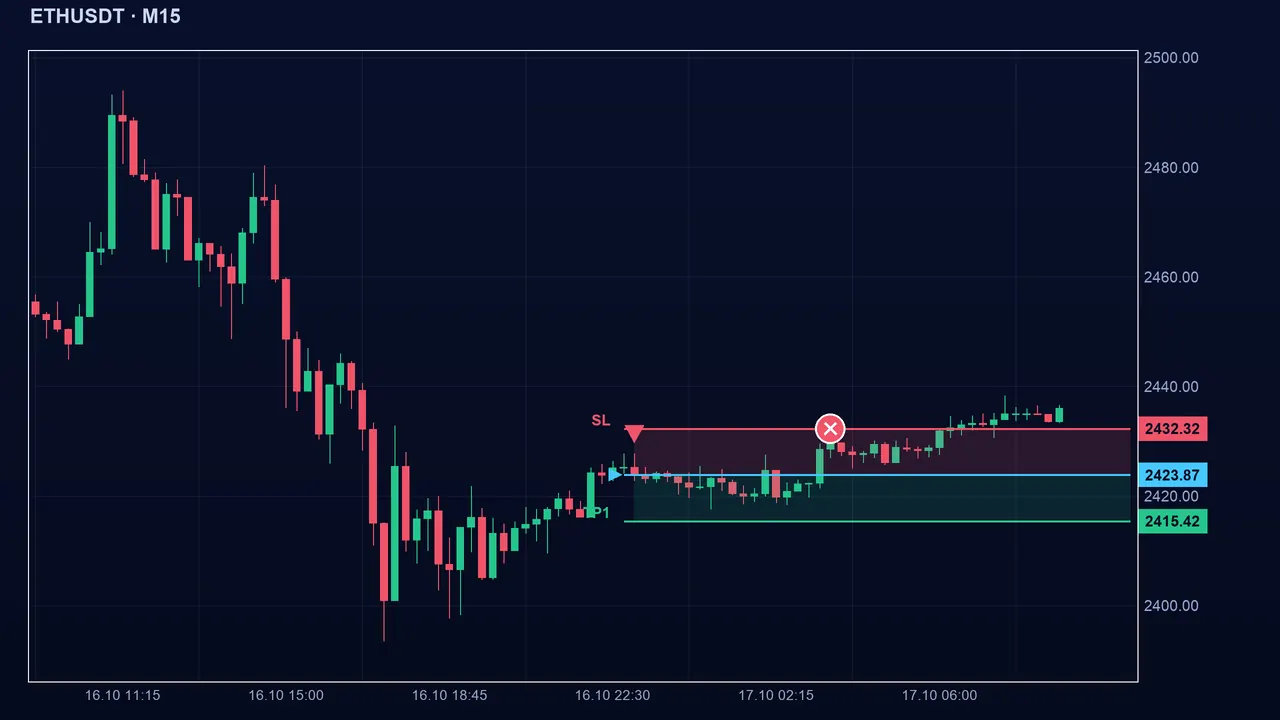
- The signal applies only to the pattern candle; what follows is never guaranteed.
📝 Lesson test
Log in to take this lesson’s test. Once you have passed all the tests, you will receive a certificate in your name.
Log inThese lessons are for understanding and are not investment advice. No method guarantees winning.